
5 Surprising Ways Babysitting Can Tie Into a Career in Healthcare
Babysitting and childcare are often seen as entry-level jobs for teenagers, but they actually build a powerful foundation for a future career in healthcare. When you look closely, many of the core skills developed through babysitting/childcare experiences directly translate to clinical environments. From patient communication to safety awareness, the overlap is stronger than most people realize. Here are five surprising ways babysitting can prepare someone for a career in healthcare.
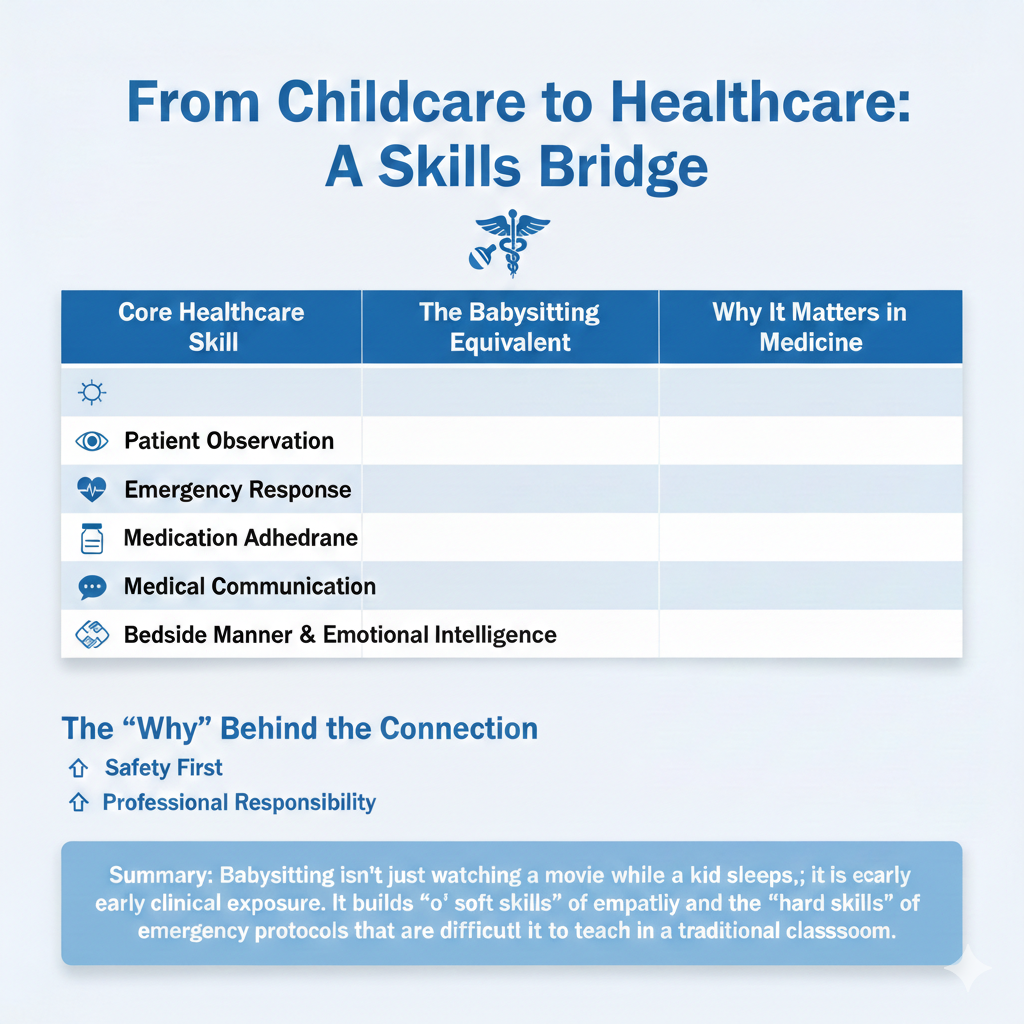
1) One of the most direct connections between babysitting/childcare and healthcare is the development of patient observation skills. Babysitters quickly learn how to monitor a child’s behavior, mood, appetite, and physical well-being. Recognizing when a child is unusually quiet, lethargic, febrile, or in discomfort mirrors the kind of observational awareness required in nursing, medical assisting, and physician roles. Early exposure to tracking symptoms, administering basic care, and communicating concerns to parents builds the same vigilance expected when monitoring patients in clinical settings.
2) Babysitting also builds foundational emergency response skills. Many babysitters pursue CPR, AED, and First Aid certification to be more employable and prepared. These certifications are often the first formal medical training young people receive. Through babysitting/childcare, individuals may respond to choking incidents, minor injuries, allergic reactions, or fevers. Learning to stay calm, follow emergency protocols, and activate EMS when necessary closely parallels the composure and decisiveness required in healthcare emergencies.
3) Another overlooked connection is medication and treatment adherence. In babysitting/childcare roles, sitters are frequently responsible for administering scheduled medications such as inhalers, antibiotics, or fever reducers under parental guidance. This introduces the importance of dosing accuracy, timing, contraindications, and documentation — all core principles in healthcare. Understanding the responsibility tied to medication safety helps build respect for pharmacologic care long before formal medical training begins.
4) Communication is another major bridge between babysitting and healthcare careers. Babysitters must communicate effectively with both children and parents, often translating complex information into understandable language. Explaining injuries, behavioral concerns, or daily health updates requires clarity, empathy, and professionalism. These same communication dynamics exist between healthcare providers, patients, and families — especially in pediatrics, home health, and allied health fields where education and reassurance are essential.
5) Finally, babysitting/childcare fosters emotional intelligence and bedside manner. Comforting a sick child, managing anxiety, handling tantrums, and creating a sense of safety all build interpersonal skills that are difficult to teach in classrooms. Healthcare professionals rely heavily on trust-building, compassion, and emotional regulation. Early childcare experiences help future providers learn how to deliver care that is not only clinically competent but also emotionally supportive.
When viewed through a healthcare lens, babysitting is far more than a part-time job — it is early clinical exposure. Babysitting/childcare teaches responsibility, safety awareness, communication, and hands-on caregiving in real-world environments. For students considering careers in nursing, medicine, EMS, or allied health, babysitting can serve as an accessible and meaningful first step into the healthcare field.